Random Posts
-

Restomod Car: 2 Brakes and Suspension
Restomod Car moves on to brakes and suspension, with oversized hardware, rust work, and stubborn front-end teardown.
-

Restomod Car: 1 Engine
The Restomod Car series starts with the engine and the realities of reviving a long-stored 1996 Opel Astra project.
-

Guitar Rebuild: 1 Onboard preamps & hardware
A Japanese 1982 Matsumoku guitar becomes the basis for a rebuild focused on onboard preamps, hardware, and a heavier final voice.
-

PC Water Cooling: Maintenance
PC water cooling can pay off in noise and performance, but this maintenance pass shows what growth and clogging eventually look like.
-

TrainWreck Rockette: 1 Redesigned
A redesign-focused start to the TrainWreck Rockette project, built around Vox AC30 roots and Johannes's own preferred twists.

Guitar Pedals: 1 Splitter pedal: Two guitar amps at once
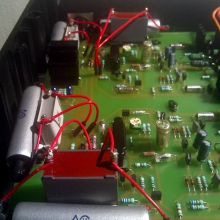
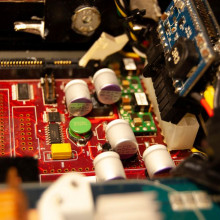
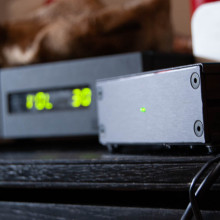
Splitting the output of your guitar/pedalboard to two separate Guitar Amps is one of the most powerful way in shaping your tone and ‘broaden’ the sound, but to do so you need some tricks. In this post I build a tiny active splitter in to the smallest enclosure possible, splitting the signal, keeping it buffered and allowing for both ground-lift and phase-change of one signal to be able to solve for any issues that may happen. When the signal goes to two amps, one of them may themselves, or due to a pedal in its effects loop, change the phase of the signal, meaning in effect your speaker cone goes out when the other amp pulls its cone in, crippling the sound resulting in soundwaves depressing each other. Here I used whatever parts I had on hand to make the box, so it is a less-than-optimal example, but good enough to quickly have a go at running two amps at once.
Next to avoid ground loops adding a spst toggle with isolated output jacks is good to break the connection between the amps if needed. And lastly, tacking on a separate opamp with an spdt bypass switch to invert the signal, all resulted in 3 separate PCB’s usually very helpful when fitting in such a little case. I’m very happy with the results, and it gives a new dynamic to playing, you can keep one amp dry while the other wet with effects, or having two separate amps playing to their different strengths, layering the sound in a very nice way.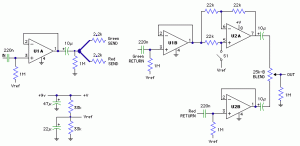
Lastly finding some water slides to use on it, whent for a sine curve for phase and ground for ground lift, And a view.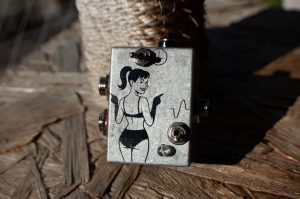
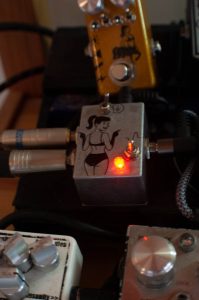
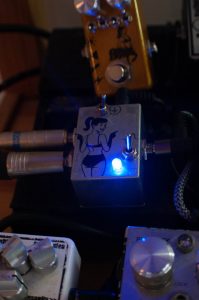
Continue in this series
More in Guitar & Pedals